Color and Odor
Natural gas is nontoxic, odorless, and colorless, making it difficult to detect. Gas providers add an odorant called mercaptan to the gas in their distribution lines. It smells like sulfur or rotten eggs.
Mercaptan can be a useful indicator of a natural gas leak. However, you may not be able to smell this odorant if you’ve been exposed to it for long periods of time or if other odors mask the smell. Mercaptan may also be stripped from the gas due to chemical and physical processes in an effect known as “odor fade.”
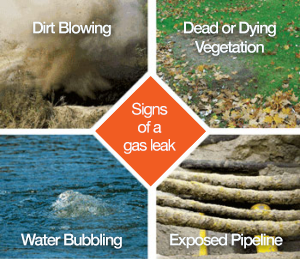
In addition, natural gas in some transmission lines has not yet been treated with odorants and, thus, has no smell. So never rely on your nose alone to detect a natural gas leak. Instead, use your combustible gas indicator to be certain a flammable atmosphere does not exist. Also, be alert for other visual and auditory gas leak warning signs, including:
- Continuous bubbling in water
- Dirt spraying or blowing into the air
- Plants or grass dying for no apparent reason, even in a moist area
- An unusual hissing, roaring, or whistling coming from the ground or gas equipment